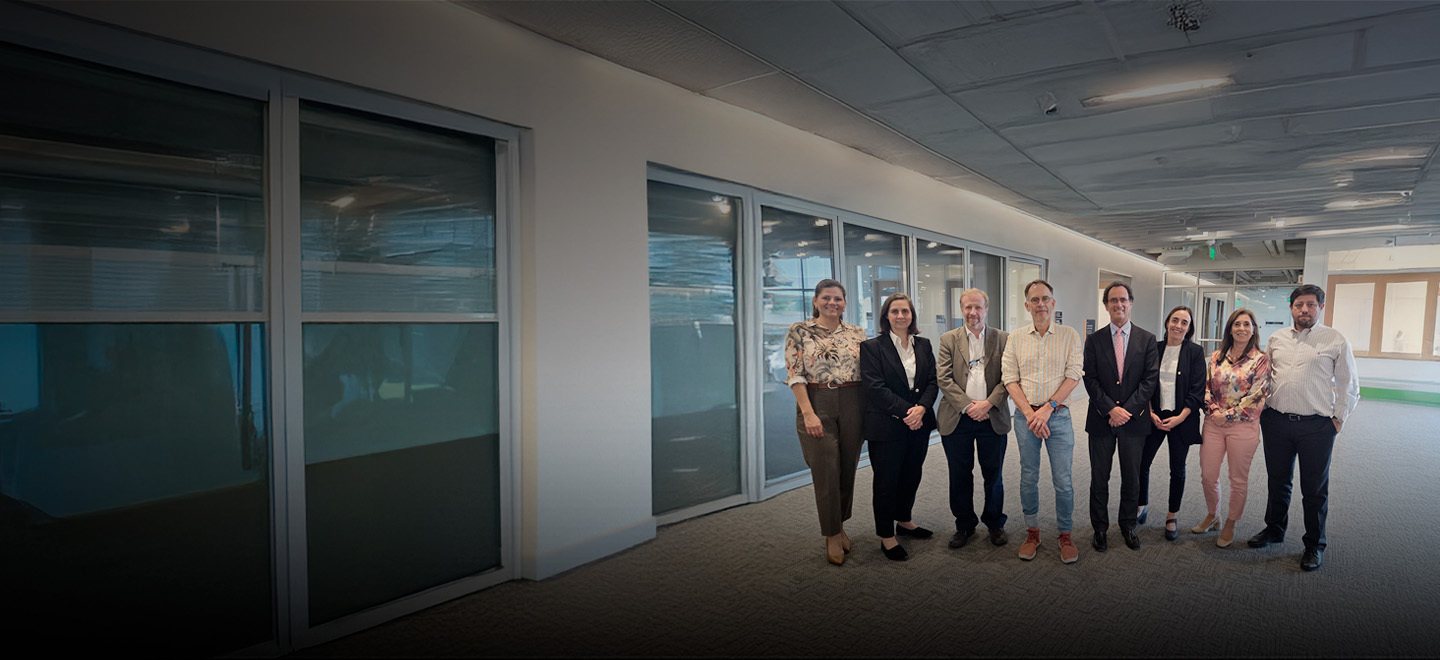
President De la Llera Strengthens UC Chile's International Presence during US tour
The highlight of this trip, led by the president and part of his team, was participating in the annual summit of the Universitas 21 network, comprised of prominent universities from around the world and held in California. The trip included a busy schedule of visits to prestigious universities such as Berkeley and Stanford, meetings with academic authorities and UC Chile alumni, and visits to technology companies such as Google.
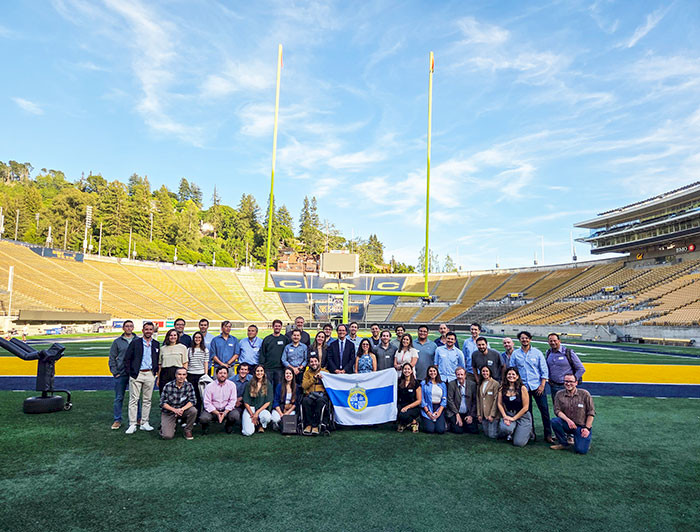
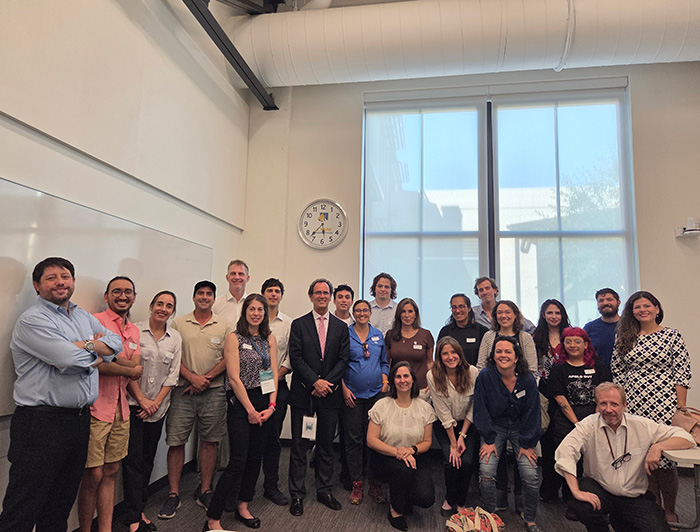
photo_camera As President Juan Carlos de la Llera states: "Together with part of the UC Chile Leadership team, we were able to identify the current frontiers of knowledge in artificial intelligence and data science, which will be key to shaping our new Office of the Vice President for Digital Innovation, Data, and Technology." (Photo: UC Chile Delegation at the University of Berkeley)
California, the world's fourth-largest economy, with key sectors such as technology and innovation, entertainment, agriculture, and tourism, is where President Juan Carlos de la Llera, along with several Leadership members, began his first international tour just over a month into his administration.
While the primary focus was his participation in the annual meeting of Universitas 21 (U21), a global network of leading universities, whose 2025 version was held at the University of California, Davis (UC Davis), the visit included an intense agenda of activities, focusing on the new Office of Vice President for Digital Innovation, Data, and Technology, with a focus on Artificial Intelligence (AI), which is being created under his administration; opening new frontiers of academic, technological, and cultural collaboration; and strengthening the UC Chile's international reach.
The president and his team put together an ambitious agenda that included parallel meetings with innovation centers, academic leaders from Stanford and Berkeley universities, UC Chile alumni, and visits to leading international technology companies, such as Google
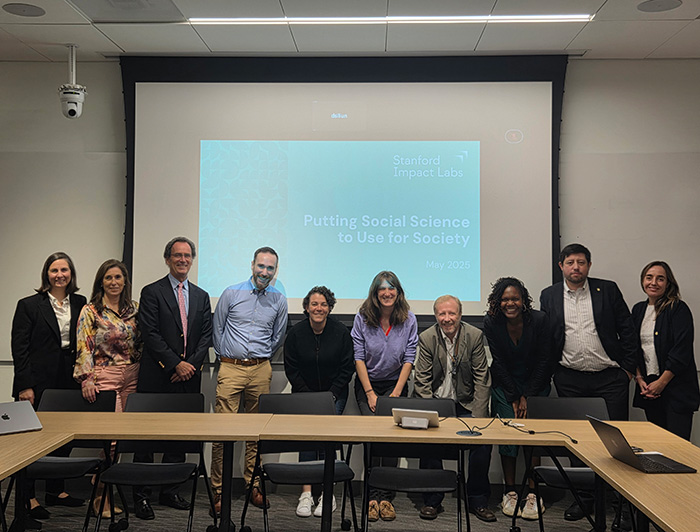
As President Juan Carlos de la Llera states, “In these think tanks, solutions to humanity's greatest problems are being seriously discussed, and being part of this debate is undoubtedly tremendously challenging for our UC Chile.”
He adds that “at this pivotal moment, where Artificial Intelligence will transform the way we work and educate, UC Chile cannot limit its field of action to simply adapting: we must lead with knowledge, ethics, critical thinking, the development of AI and data science, from a vision focused on the good of the human being.”
Along with the rector, the Provost for Institutional Management, Francisco Gallego, the Vice President for Academic Affairs, Mario Ponce, the Vice President for Research, María Angélica Fellenberg, and the Vice President for International Affairs, María Montt, participated in this tour. They held parallel meetings with representatives and researchers from various US institutions, aligning with the interdisciplinary and global strategy promoted by President De La Llera and his team.
“In these think tanks, solutions to humanity's greatest problems are being seriously discussed, and being part of this debate is undoubtedly tremendously challenging for our Catholic University,” - Juan Carlos de la Llera, UC Chile President.
Meetings with Authorities and Alumni
The day included a significant meeting with UC Chile alumni, who now work in global technology companies and high-level research centers. In a close and informal atmosphere, reflections were shared on the international experience of these professionals, and a particularly sensitive topic was addressed: the recent brain drain from the United States to other countries, driven by the crisis affecting several North American universities. This dialogue was particularly revealing for the president regarding the challenges and opportunities facing doctoral training and the circulation of advanced human capital.
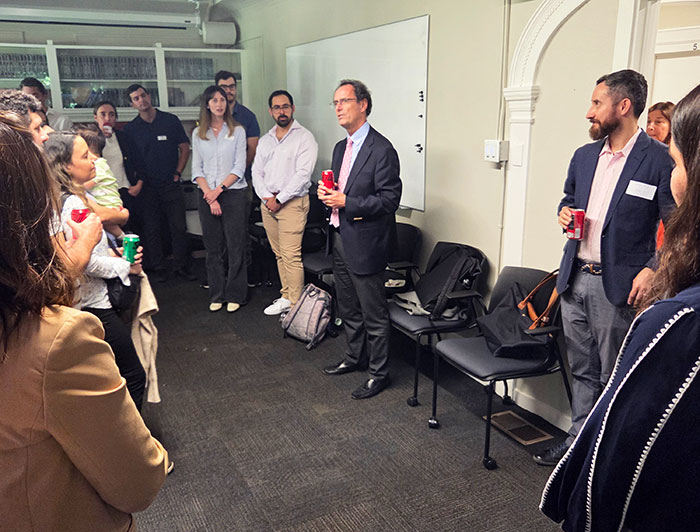
As Provost for Institutional Management, Francisco Gallego explains, “It was a super interesting meeting where the President could share some of his ideas. The participants introduced themselves and expressed their tremendous interest in Chile and the University; they showed a tremendous willingness to collaborate on University projects and activate alumni networks.”
“Meeting with more than 100 UC Chile alumni in California is a source of tremendous pride: they contribute to global challenges with creative perspectives and enormous commitment. It is energizing to see our University “ambassadors,” global citizens,” adds Vice President for International Affairs, María Montt.
On Tuesday, the 6th, the UC Chile delegation traveled to Stanford University. Juan Carlos de la Llera met with the AI Meets Education initiative team, Stanford Impact Labs, and prominent academics, such as Guido Imbens, the 2021 Nobel Prize laureate in Economics. He also met with representatives of sustainability, data science, and interdisciplinary education.
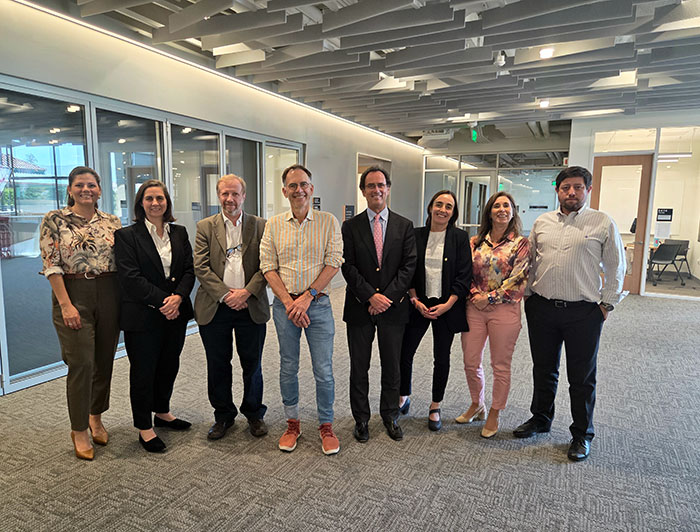
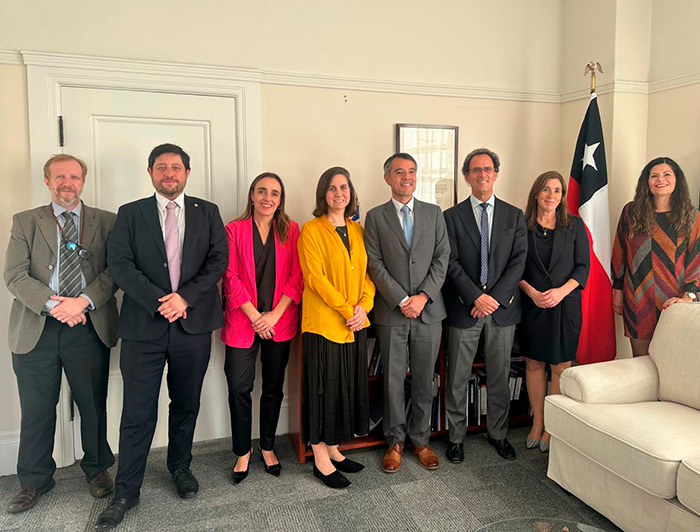
The following day, the activities continued with a visit to Google's offices, where topics such as artificial intelligence, innovation, and possible future collaborations were discussed. The agenda also included a visit to the Chilean consulate in San Francisco, where the Consul General, Patricio Cabezas, received the UC Chile delegation, who took office on April 1.
“On this mission, we have seen that the UC Chile is in line with the approach of California universities, in terms of the importance of developing cutting-edge research and research with direct impact, that is, research that reaches people and allows them to improve their lives. How can we have an impact? In different ways, by contributing to public debate and supporting the development of better public policies with knowledge, or by communicating effectively, or transferring technologies to industry,” comments Vice President for Research, María Angélica Fellenberg.
She adds: “To evaluate the above, measuring this impact is important, a topic constantly under construction. In that sense, our visit to the Stanford Impact Labs was fascinating, a new model at this university that places the social sciences at the service of society, partnering with communities.”

U21: A Network to Address Global Challenges
Imagining the future of Higher Education in an increasingly changing world was the invitation with which the Universitas 21 network welcomed the rectors and senior leaders of its member universities to its annual meeting, held this year in California by host UC Davis.
This meeting offers a unique opportunity for university leaders to meet and reflect on the changing role of higher education institutions and networks in addressing global challenges through research, education, and public engagement.
As Vice President for International Affairs, María Montt states: “U21 is an extraordinarily valuable forum for discussing global challenges and how universities can address them. The role universities play in society and globally, and how this role is implemented, are questions that guide the conversations.” She adds: “Participation in a network like U21 strengthens and facilitates the global dialogues in which our university community participates.”
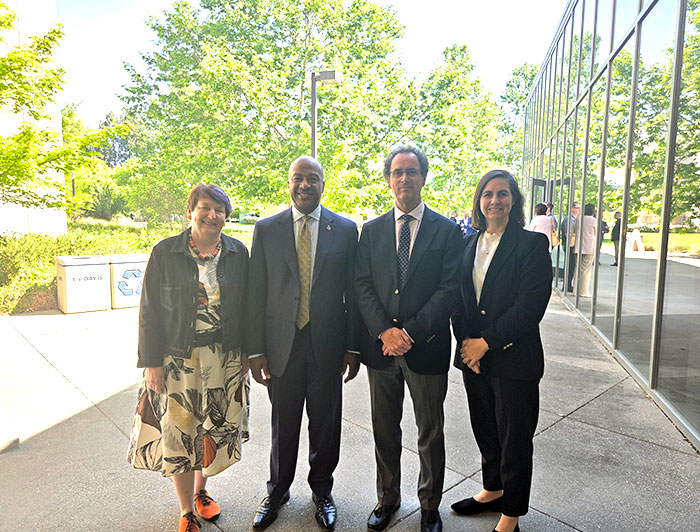
The network is comprised of 30 universities. Tecnológico de Monterrey and the UC Chile, which joined in 2012, are the only Latin American universities in the network. They connect with leading international institutions such as the University of Maryland in the United States, KU Leuven in Belgium, Lund University in Sweden, the University of Amsterdam in the Netherlands, the University of Glasgow in the United Kingdom, the National University of Singapore, the University of Hong Kong, the University of Delhi in India, the University of Sydney in Australia, and the University of Auckland in New Zealand, among others.
“Participation in a network like U21 strengthens and facilitates the global dialogues in which our university community participates,” said María Montt, Vice President of International Affairs at UC Chile.
The network has three main focuses: education, research, and health, which are addressed globally. These are complemented by equity, diversity, inclusion, and sustainability.
“We had very productive meetings with the university officers, where we reviewed our terms of reference, presented proposals for joint work, and exchanged ideas on how to connect with U21 members effectively and how to promote the network's value, in line with the organization's new strategic objectives,” comments Catalina Gerstmann, Head of Strategic Relations at the Office of the Vice President for International Affairs, who participated in the meeting as an officer, or direct link with the network's secretariat.
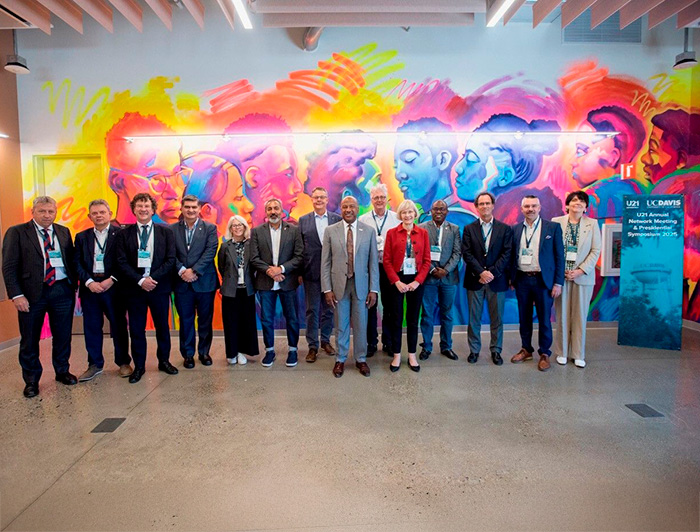
Our authorities and professionals participate in the network's governance and collaborative groups, but U21 also offers opportunities for the entire university community. For example, student training is provided through the Global Citizens, U21 Summer School, and U21 School of Public Policy programs, and training for professionals and administrators through the Global Leadership program. It also organizes workshops for researchers (Early and Mid-Career Research) and competitions for doctoral (3MT Global) and undergraduate (Real Impact on Society and Environment) projects.
In addition, the network has three research funds: the U21 Collaborative Seed Fund 2025, the U21 Global Health Research, and the U21 Nature Positive Coalition Fund. It also offers three recognitions: the U21 Award, the U21 Leaders of the Future, and the Pioneer Award. In 2024, UC Chile law student Rayen Alarcón was chosen as the winner in the Leaders of the Future category for her work promoting interculturality within the university community.
As Vice President for Academic Affairs, Mario Ponce states: “This first trip has been very beneficial in several ways. We explored curricular processes, the student experience, new ways of looking at future education, mechanisms to support teaching and learning, the incorporation of artificial intelligence into educational processes, and we saw infrastructure models that can be applied, among others. Incidentally, we also realized that, in several areas, these universities have paths, ideas, and problems similar to ours. A difference in budgetary scale certainly distances us, which drives us to be creative in gathering resources from diverse sources, in utilizing the talent of our teams, and in the confidence that international collaboration will allow us to find our path, aided by the shortcuts that arise from incorporating good practices from world-class institutions.”
President De le Llera concludes: “This tour has been profoundly revealing. Together with part of the UC Chile Leadership team, we were able to identify the current frontiers of knowledge in artificial intelligence and data science, which will be key to shaping our new Office of the Vice President for Digital Innovation, Data, and Technology. But it was also a strategic opportunity to learn about the major concerns facing universities worldwide today, in a particularly challenging context of uncertainty and financial restrictions faced by universities in the United States.”


